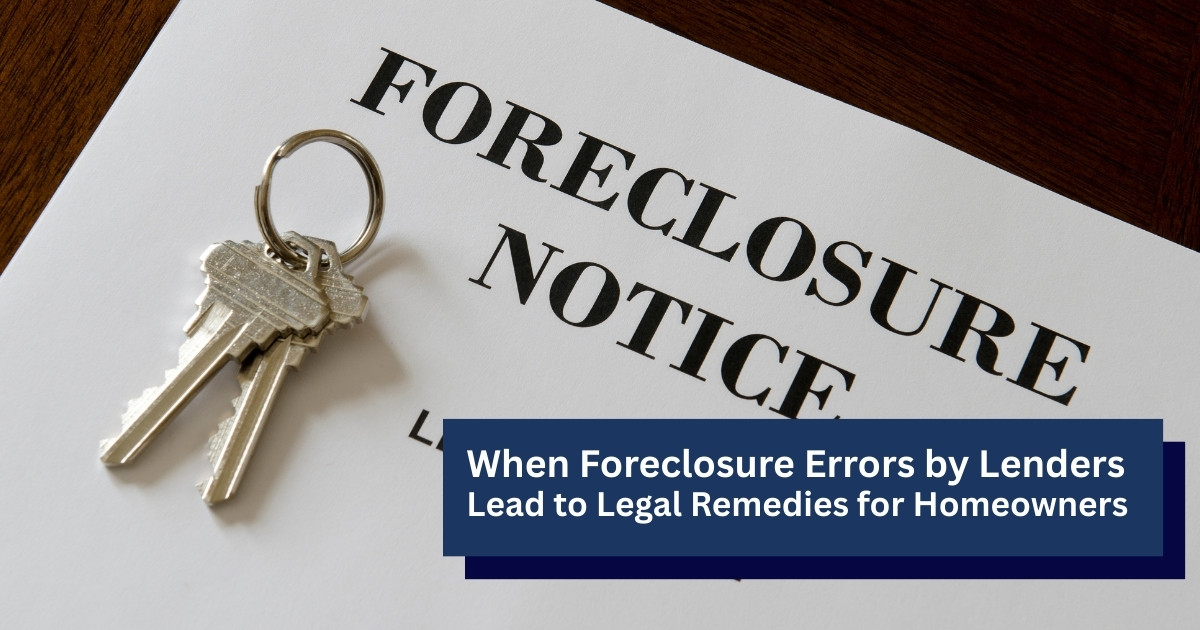
Lenders can make mistakes during the foreclosure process.
When those errors lead to a wrongful foreclosure in Fort Lauderdale, homeowners may have legal options to protect their property and finances.
Understanding how these mistakes happen gives you a stronger position from the start, and a Fort Lauderdale foreclosure attorney can help.
Common Lender Errors That Trigger Wrongful Foreclosure Claims
Some lender mistakes may seem small, but they can cause significant problems for homeowners facing foreclosure proceedings. Some common mistakes include:
- Processing payments on the wrong account
- Miscalculating escrow
- Mistakenly adding extra fees
- Losing paperwork
Forgetting about loan modification requests
Ignoring agreements made during negotiations
These errors can lead a lender to start foreclosure even when the homeowner was not behind, or not as behind as the lender said.
Florida Requirements for Proper Notice and Documentation
Florida law sets clear rules for foreclosure.
Lenders must send accurate notices, provide correct payment histories, and file valid documents with the court. They must also give homeowners a chance to fix any default.
When lenders skip these steps or provide inaccurate information, the foreclosure may not be lawful. Simple mistakes in dates, loan numbers, or payment amounts can make a big difference in a case.
How Mortgage Servicing Violations Lead to Unlawful Fort Lauderdale Foreclosure
Mortgage servicing issues often happen behind the scenes, and homeowners may not notice them until the foreclosure process has already begun. Servicers sometimes fail to update account records, delay payment processing, or ignore homeowner notices of errors on the loan.
In some cases, servicers violate federal timelines for responding to written requests.
These deeper servicing problems can create an unlawful foreclosure path and place Fort Lauderdale families at real risk of losing their homes.
Legal Remedies Available to Fort Lauderdale Homeowners
Homeowners can challenge the foreclosure in court, ask to reinstate the loan, or request a full review of the lender’s records.
Some may file a claim for losses caused by the lender’s mistakes.
Others may ask the court to pause the foreclosure sale until the problems are fixed. Bankruptcy is another option in some cases. Filing for Chapter 13 or Chapter 7 can temporarily stop a foreclosure sale and give the homeowner time to reorganize their payments.
Evidence Homeowners Can Use to Challenge Foreclosure Errors
Strong records make a significant difference. Valuable evidence includes bank statements, proof of payments, correspondence with the lender, and copies of any loan modification applications.
Homeowners should also save notices, account histories, and screenshots from their online loan portals whenever they show errors. These documents help build a clear picture of what happened.
Contact Our Fort Lauderdale Foreclosure Lawyers for Help
If you believe your lender made mistakes, you do not have to face this alone.
A Fort Lauderdale foreclosure defense attorney will review your case, identify any errors, and guide you through your options.
Contact the Florida foreclosure defense attorneys at Loan Lawyers today for help protecting your home and your future.
- About the Author
- Latest Posts

Matis Abarbanel is the founding partner and senior attorney at Loan Lawyers in South Florida. He focuses his practice on consumer rights, helping homeowners navigate issues such as foreclosure and financial hardship. Matis also brings a wealth of experience from his previous work in personal injury law. As a devout Chasidic Jew, he is committed to making a positive impact in his community and dedicates his efforts to charitable initiatives through his non-profit organization, The Center, which aids at-risk Jewish youth. Matis actively serves clients across South Florida and is passionate about empowering individuals to secure their rights and achieve a better future.